
Apple Music vs Spotify: Where Should You Focus?
In today’s streaming-heavy landscape, the question isn’t whether to invest in DSPs, it’s how to prioritise them effectively. With Spotify and Apple Music dominating global music consumption, understanding their distinct roles is key to building a smart, results-driven digital strategy.
So where should your focus go in 2026?
Scale vs Value
At a macro level, Spotify and Apple Music represent two fundamentally different ecosystems.Spotify is the undisputed leader in scale with 600–700+ million monthly active users and a significant free-tier funnel that drives discovery.
Apple Music, by contrast, sits at roughly 100 million subscribers (all paid), offering a smaller but more monetisable audience.
As such, their roles can be broadly understood as:
Spotify = reach, discovery, volume
Apple Music = revenue quality, stability, premium engagement & audience

Discovery vs Monetisation
If your goal is audience growth, Spotify remains the strongest channel.
Its ecosystem, editorial playlists, personalised mixes, and viral cultural moments like Wrapped, drives significant user engagement and music discovery.
With Apple Music, every stream comes from a paying user, generally resulting in higher per-stream value (roughly 2-3x Spotify).
Strategic implication:
Prioritise Spotify for fan acquisition, cultural momentum and virality
Prioritise Apple Music for revenue efficiency and fan retention
Audience, Behaviour & Platform Strengths
Spotify and Apple Music don’t just differ in scale, they attract different types of listeners and drive different kinds of engagement.
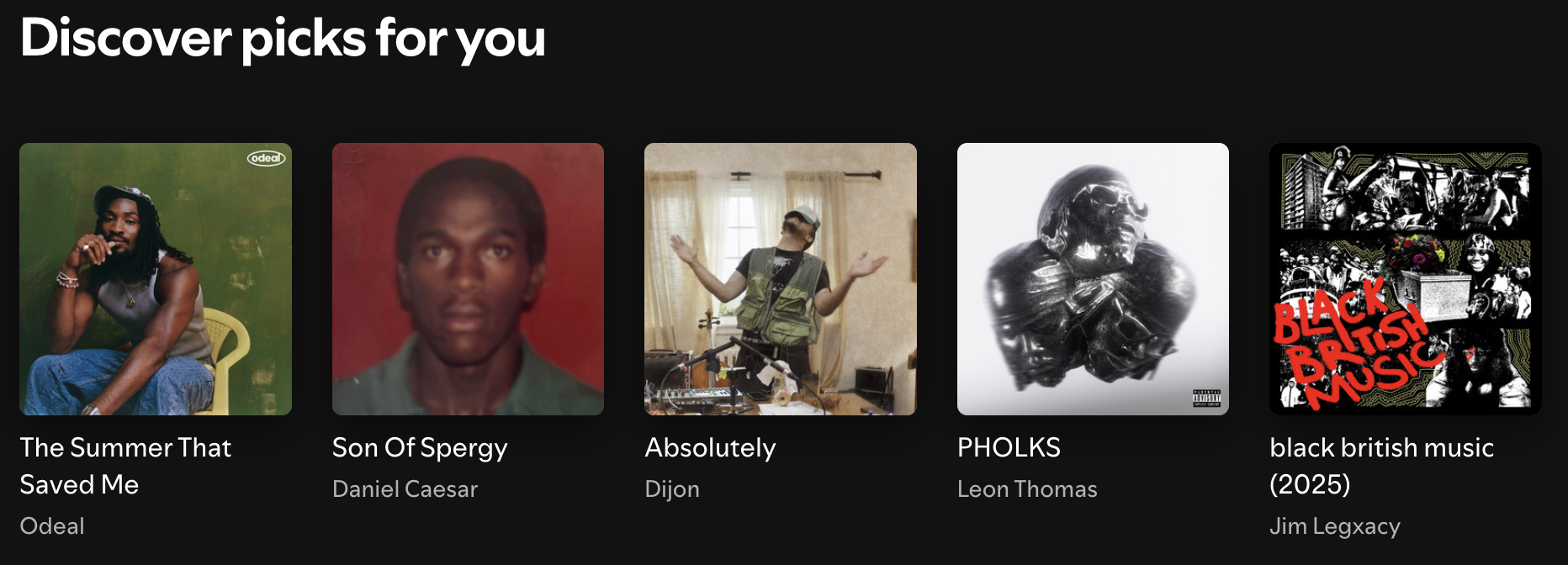
Spotify audiences tend to skew younger, more social-first, and heavily playlist-driven, with behaviour centred around discovery. This aligns with the platform’s core strengths: best-in-class algorithmic recommendations, a powerful mix of editorial and user-generated playlists, and built-in viral mechanics like sharing and Wrapped. Combined with its reach across 180+ markets, Spotify functions as a growth engine, ideal for breaking new artists, scaling catalogue, and driving top-of-funnel engagement.
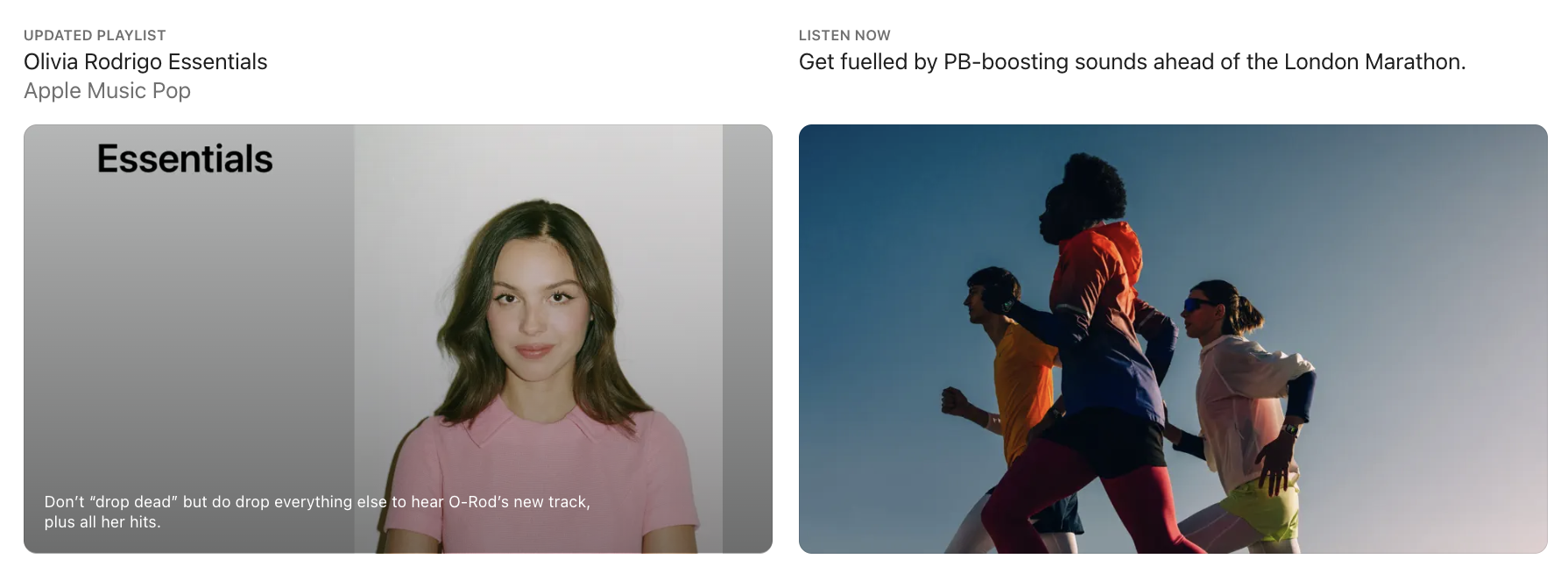
Apple Music audiences, by contrast, are typically more embedded in the Apple ecosystem, with higher average revenue per user and stronger artist loyalty. Listening behaviour is less passive and more intentional, often favouring albums and repeat engagement. This complements Apple Music’s strengths: high-value streams, strong editorial curation, deep integration with iOS and hardware, and a fully subscription-based user base. As a result, it operates as a premium channel, better suited to maximising value per fan, supporting established artists, and driving revenue in high-value markets like the US, UK, and Japan.
Platform Strategy Framework
For most labels and distributors, the optimal approach isn’t choosing one platform, it’s understanding how they work together.
A common framework:
1. Launch Phase (Discovery-first)
- Spotify: (playlisting, Marquee, Discovery Mode)
- Objective: reach, data gathering, audience building
2. Growth Phase (Hybrid)
- Maintain Spotify momentum
- Increase focus on Apple Music editorial and positioning
- Objective: convert casual listeners into higher-value fans
3. Catalogue Phase (Monetisation-first)
- Lean further into Apple Music for sustained value
- Use Spotify for ongoing discovery and catalogue resurfacing
This dual-platform strategy reflects wider industry findings: campaigns that leverage Spotify for scale and Apple Music for monetisation consistently outperform single-platform approaches.
Key Takeaways
Spotify for growth
Apple Music for value
Long-term success comes from using both, with clear roles
In 2026, the competitive edge doesn’t come from picking sides, it comes from understanding how each platform fits into the wider funnel. Spotify builds demand. Apple Music captures its value. The question isn’t where to spend more, it’s where to focus first, and why.