
YouTube has updated the way it counts views across the platform, introducing a more standardised definition covering Shorts, long-form videos, podcasts and live content.
Previously, a view was counted based on a viewer actively choosing to watch or continuing beyond the initial moments. Under the new definition, a view is counted as soon as playback begins, with the previous definition now referred to as an 'engaged view'.
So, what does this mean for artists and labels, and is there anything to consider when looking at YouTube performance?
Views vs Engaged Views: What's the Difference?
The main change is how YouTube distinguishes between a video starting to play and someone actively watching it.
Views: Counted as soon as playback begins.
Engaged views: Counted when someone actively chooses to watch or continues watching beyond the initial seconds.
Impressions: A video thumbnail appearing on someone's screen without them interacting with it.
The same approach applies to Shorts, where a view is counted as soon as a Short starts playing in the feed.
If someone clicks on a video and starts watching, this counts as both a view and an engaged view.
What Does This Mean for Artists and Labels?
For music campaigns, raw views have always been only one part of the picture.
A music video receiving 100,000 views tells you something about its reach, but understanding whether people actually stayed to watch gives you a much stronger indication of audience engagement.
That makes metrics such as audience retention, average view duration and click-through rate (CTR) particularly important when assessing how content is performing.
YouTube has confirmed that the way clicks and taps are counted has not changed, and that the vast majority of analytics remain anchored around engaged views. As a result, metrics including CTR, average view duration and retention are not changing because of this update.
For artists and labels, this means there is no need to suddenly rethink a campaign simply because the headline view number may behave differently.
Instead, the focus should remain on getting the right audience to watch – and keeping them watching.
Has Anything Changed with YouTube Recommendations?
According to YouTube, no. YouTube has confirmed that the update does not change how its recommendation system works.
For artists and labels, this means the same principles still apply when planning video content. Strong openings, engaging visuals, effective thumbnails and titles all play a part in encouraging people to watch.
It's also worth considering how different formats can work together, from official music videos and Shorts to behind-the-scenes content and artist-led videos.
What About Monetisation?
The update doesn't change YouTube Partner Programme eligibility or the way earnings are calculated.
Engaged views continue to be used for monetisation eligibility, including for Shorts. Qualified Shorts views must meet YouTube's relevant requirements, with loops excluded from the calculation.
What Should Artists and Labels Take Away?
The main thing is not to focus too heavily on the headline view count when reviewing performance.
A few metrics worth keeping an eye on:
Engaged views: A better indication of how many people are actively watching your content.
Average view duration: How long people are spending watching.
Audience retention: Whether viewers are sticking around or dropping off.
CTR: How effectively your thumbnails and titles are encouraging people to click.
It's also worth looking at YouTube performance alongside the wider release campaign, including streaming activity, social engagement and how Shorts are contributing to discovery.
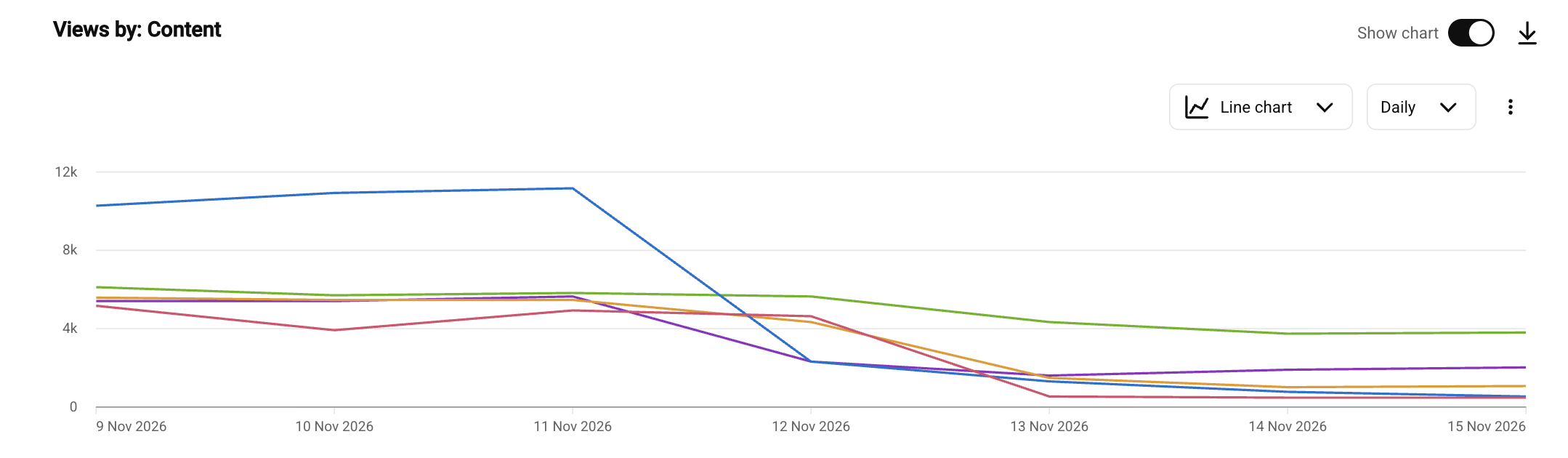
The update is ultimately about creating a more consistent definition of a view across the platform.
For artists and labels, the practical takeaway is relatively straightforward: don't treat a view as the whole story. The headline view count may tell you how many times playback started, but engaged views, retention and viewing behaviour can tell you much more about how audiences are responding to the content.